
From magnets and notes to control and structure
In the past, internal planning at Vredehof was mostly done on paper. Handwritten notes, magnetic boards, and scattered Excel sheets shaped the daily workflow.
“Paper is patient,” Erik explains. “But if something’s hanging on a wall, it’s not accessible to everyone. And if you want to know who’s doing what today, you really have to go find it.”
On top of that, a large portion of the workforce — around 70 employees — work flexibly, often on call. A streamlined, clear planning system wasn’t just nice to have; it became essential.
Choosing vPlan
Vredehof began looking for a user-friendly tool that could offer visual insight, fast planning, and integration with their ERP systems.
“What appealed to us was how quickly they could act and the personal contact,” says Stephan. “From the very first interaction, we felt confident. You just know someone is always available when you need help. The reliability, consistency, and user-friendliness of vPlan were decisive for us.”
Thanks to the integration with AFAS and Dyflexis, employees only need to be added once in AFAS and are then automatically synchronized with both vPlan and Dyflexis less manual work, fewer errors, and more time saved.

Step-by-Step Implementation
The implementation was done in phases. Together with partner Differit and integration partner Improvit, the connection between AFAS, vPlan, and Dyflexis was set up.
“This saves us time,” Stephan explains. “You only need to create an employee once in AFAS, and they automatically appear in Dyflexis and vPlan.”
Vredehof started with a pilot group of planners, care workers, and funeral directors, followed by a broader rollout. Each funeral is created as a project in AFAS, which automatically generates tasks in vPlan — such as care, transportation, or a family meeting.
If a task is accidentally scheduled on the wrong date in AFAS, it shows up immediately in vPlan and can be easily corrected.
“In our line of work, there’s no room for error,” Stephan emphasizes. “We can’t ‘redo’ a funeral. That’s why we always run test phases first and carefully evaluate everything before we fully implement any new process.”
How one planning system connects everyone
The operations office receives a notification and creates the case as a project in AFAS. Immediately, two initial tasks are generated in vPlan: one for post-mortem care and one for the funeral director. The funeral director then adds to the case during the meeting with the family, for example, tasks for transport, printing, or flowers.

Need transport? That task is automatically placed in vPlan’s transport schedule. The planner assigns an available vehicle to the case.
“It’s very clear,” Erik says. “At a glance, you can see which cases still need planning and which vehicles are available, by day and by hour. It makes assigning the right transport task incredibly easy.”

“Where we used to search for case statuses or open tasks, that information now comes to us. If something changes, we know right away. That’s a big advantage when you’re all working in the same planning system.”
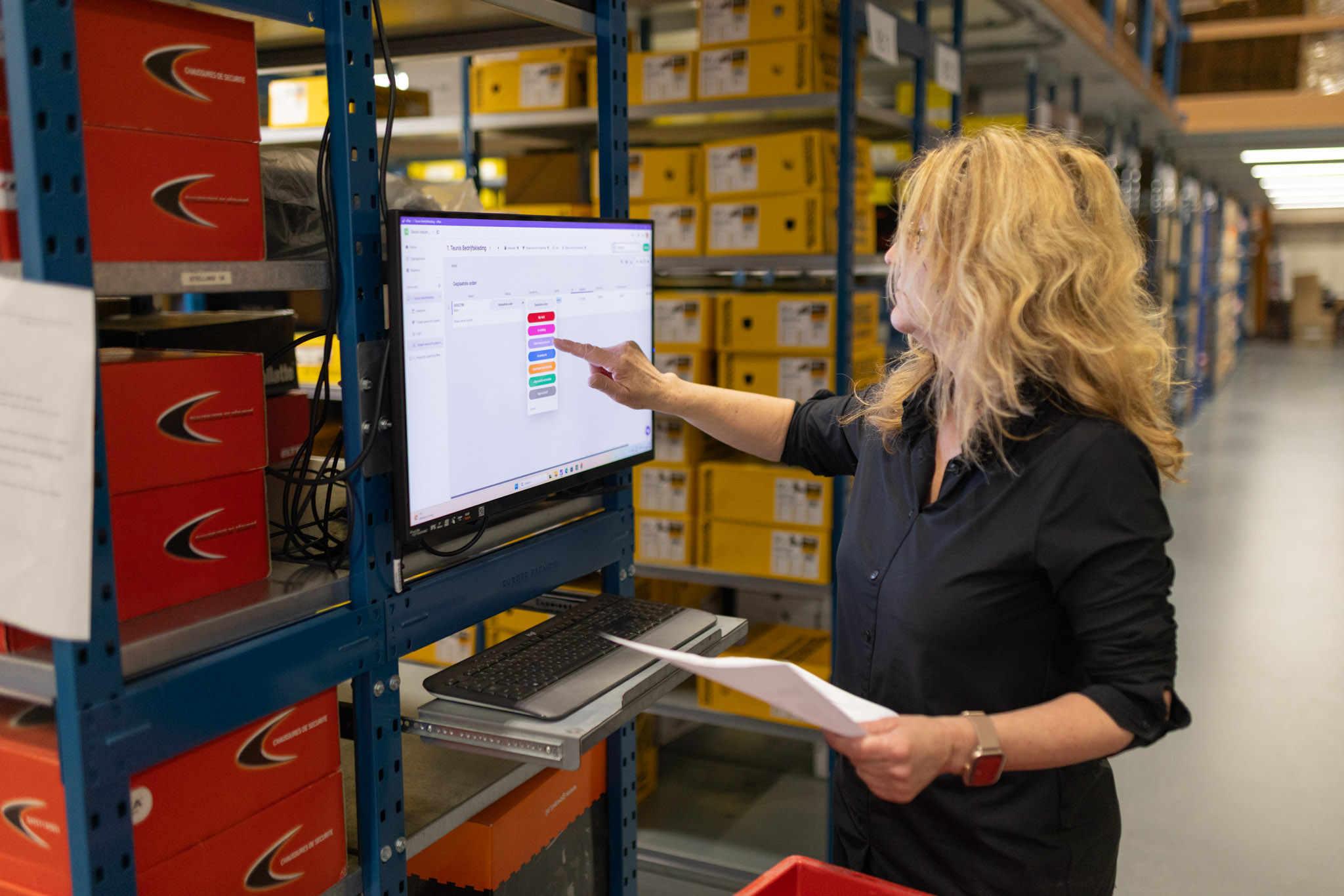
And it’s not just planners who benefit. Field staff — from care to transport — have instant access to their tasks via the vPlan app. “They can see exactly what’s pending and what needs to be done that day. All case details are in the app, so they always have the right information on hand. Need to check something? It’s just a tap away.” vPlan ensures that everyone, from the office to the field, can work with confidence and clarity.

Digitalization and automation for greater efficiency
The integration between AFAS and Dyflexis already represents a significant step in automation. They can carry over specific fields from AFAS into vPlan, ensuring that information is always up to date and available in the right place.
Notifications and smart automations help staff avoid missing steps. If a task goes past due without a status update, they’re automatically alerted.
Labels also make work more transparent. “For example, in the planning of funeral directors,” Erik explains. “If someone is temporarily unavailable to handle a case, we tag it with a red ‘reassign’ label. The planning team immediately knows it needs to be reassigned.”
For transport staff, this has been a major improvement as well. “In the morning, they just open the app and immediately see where they need to go,” says Erik. “No more loose paper notes, no more uncertainty. Everything is clearly planned out. It brings structure and confidence.”
More peace of mind, less Stress and room to look ahead
With vPlan, Vredehof has gained more control over daily operations. Planners begin their day with a clear overview of all active cases. Staff in care and transport receive up-to-date tasks through the app, accessible anytime and anywhere.
“Where we used to only plan a day or two ahead, now we can look ahead a full week,” Erik says. “That means we can schedule people earlier, reduce last-minute changes, and bring more calm to the organization.”
Paper isn’t gone entirely, but the printer is clearly used less. And communication is faster and more structured than ever.
Conclusion: ready for the future
At Vredehof, the goal is clear: to continue digitalizing, step by step. Not through a “big bang” approach, but with care and guidance aligned with the organization and its people.
“It’s easy to keep optimizing as we go,” Erik adds. “During use, you discover that a label or status might need tweaking and you can adjust it instantly. That’s a big advantage of vPlan: you’re self-reliant and can adapt quickly. And if you do have a question, the support articles and videos are often all you need. It really inspires us to keep improving.”
“There’s no complete software solution for our sector yet,” says Stephan. “But together with vPlan, we’re building one.”
At Vredehof, everything revolves around care, attention, and trust. And thanks to vPlan, they can now embody those values internally in their planning and operations every single day.